Recovering unpaid invoices is one of the most frustrating challenges for growing businesses. You deliver the service, send the invoice, and then there is a silence. What starts as a small delay quickly turns into weeks or months of outstanding payments, hurting cash flow and eating up valuable time.
Many businesses still try to recover unpaid invoices manually, sending reminder emails, making uncomfortable phone calls, tracking spreadsheets, and constantly checking accounting software. This approach doesn’t scale, drains productivity, and often leads to lost revenue.
The good news? Modern automation has changed the game. Today, businesses can recover unpaid invoices without manual work by combining the right strategies with smart automation tools.
Let’s explore why unpaid invoices pile up, why manual chasing fails, and how automation creates the foundation for consistent invoice recovery.
Unpaid invoices aren’t always caused by bad clients. In many cases, payments slip through the cracks for simple reasons:
According to QuickBooks’ 2025 Small Business Late Payments Report, 56% of U.S. small businesses surveyed reported being owed money from unpaid or late invoices.”
If your invoicing process depends on humans remembering to follow up, you’re setting yourself up for revenue leakage.
To recover unpaid invoices consistently, businesses need systems, not memory.

Many teams believe manual follow-ups are “free” because they’re already on payroll. In reality, manual work is extremely expensive.
Here’s what happens when you rely on people to recover unpaid invoices:
According to PYMNTS, many firms that rely on manual accounts-receivable processes suffer delayed payments, increased cash-flow strain, and revenue loss, a burden that automation can significantly reduce.
Manual work doesn’t just slow down payment recovery; it also increases burnout and errors.
Most businesses default to email reminders when trying to recover unpaid invoices. While email is important, it’s no longer sufficient on its own.
Consider these facts:
Multiple industry-wide SMS marketing reports cite that SMS open rates often land in the 90–98% range, which is significantly higher than typical email open rates (often 20–30%)
If your invoice reminders rely only on email, you’re leaving money on the table.
To recover unpaid invoices faster, businesses must use multi-channel communication.
Invoice recovery automation removes human dependency from the payment follow-up process. Instead of relying on people, automation ensures every invoice gets consistent attention until it’s paid.
Core benefits of automation include:
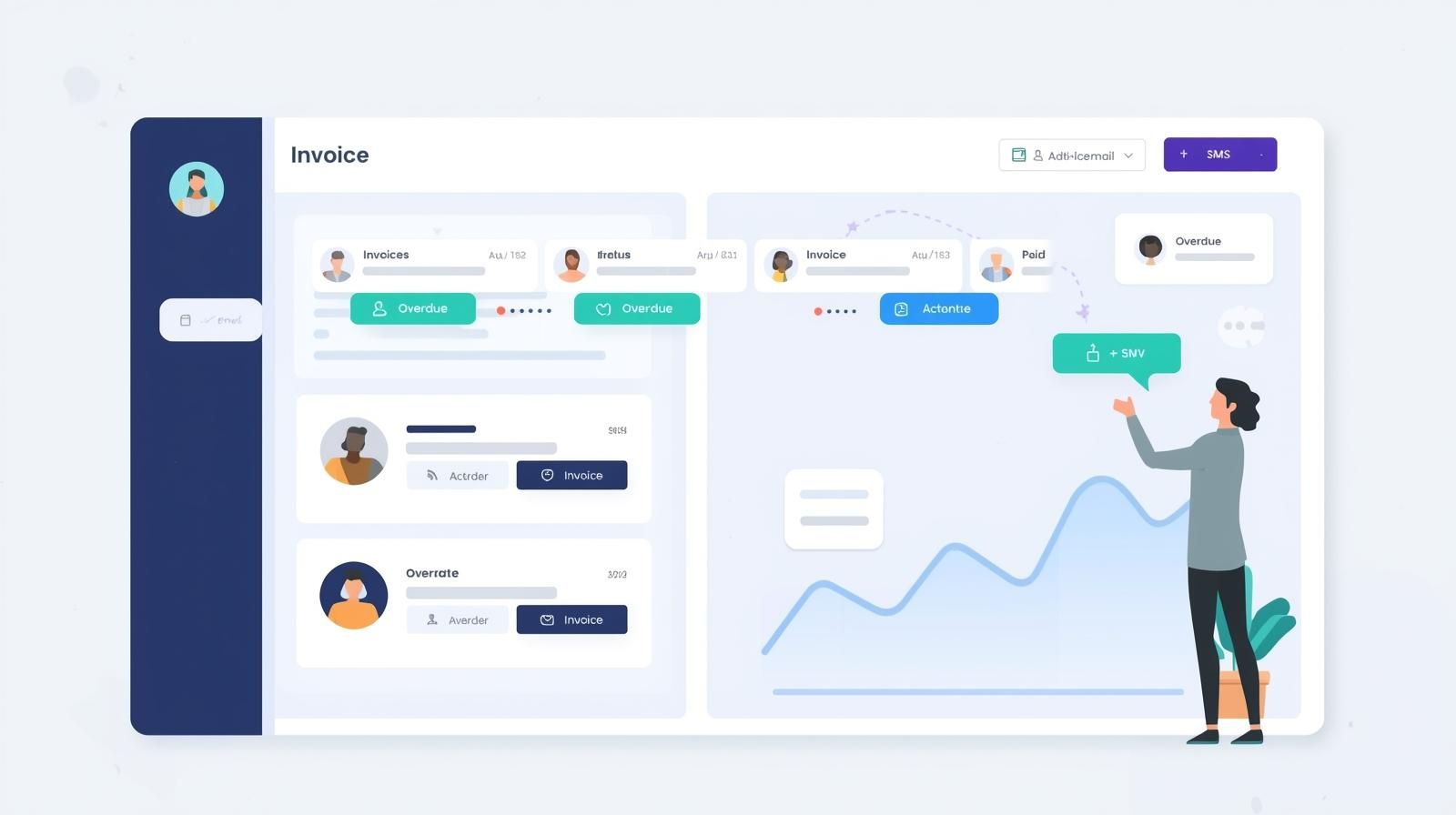
Modern invoice automation software connects directly to accounting platforms, monitors invoice status, and sends reminders automatically.
This is where tools like Retenva stand out, by syncing with platforms like QuickBooks Online, Stripe Invoicing, and Xero, automation becomes effortless and accurate.
One major challenge businesses face is managing invoices across multiple systems. Sales teams might use Stripe, finance teams use QuickBooks, and international teams rely on Xero.
Manual reconciliation across platforms leads to:
Multi-platform synchronization eliminates these issues by pulling invoice data from all systems into one automation engine.
When platforms are connected:
This synchronization is important to recover unpaid invoices without creating confusion for your customers.
SMS reminders are one of the most effective ways to recover unpaid invoices quickly.
Why SMS works so well:
Automated SMS invoice reminders allow businesses to:
When SMS is combined with email reminders, payment recovery becomes significantly faster.
One fear many business owners have is that automation will feel impersonal. In reality, the opposite is true.
Automated reminders:
Clients often appreciate gentle, timely reminders, especially when they’re busy or managing multiple vendors.
A well-designed system helps recover unpaid invoices while preserving long-term relationships.
Recovering unpaid invoices isn’t just about getting paid; it’s about predictability.
When follow-ups are automated:
Recent industry research shows that businesses using automated accounts receivable software often accelerate payment cycles significantly, one survey found payments sped up by up to 40%, and 92% of finance leaders reported faster cash flow.
That stability can be the difference between stagnation and growth.
At its core, the ability to recover unpaid invoices without manual work depends on three elements:
Recovering unpaid invoices isn’t just about sending reminders; it’s about sending the right reminder at the right time through the right channel. Many businesses automate follow-ups but still see weak results because their strategy lacks structure.
Now let’s explore proven automation strategies that help businesses recover unpaid invoices faster, without damaging client relationships or creating manual overhead.
You cannot recover unpaid invoices efficiently if you don’t know which ones are unpaid in real time.
Most accounting systems store this information, but manually checking dashboards every day creates delays. Automation solves this by continuously monitoring invoice status.
With automated invoice monitoring:
Platforms like QuickBooks Online, Stripe Invoicing, and Xero already contain accurate invoice data. When an automation layer sits on top of them, businesses eliminate blind spots.
According to Xero and its ecosystem of debtor-tracking tools, businesses that issue invoices with payment links and automated reminders tend to get paid faster than those relying on manual follow-up
One of the most overlooked tactics to recover unpaid invoices is preventing them from becoming unpaid in the first place.
Pre-due reminders prepare clients mentally to pay.
Effective pre-due reminders include:
Automated systems ensure every invoice gets the same treatment, without manual tracking.
This proactive approach significantly improves payment behavior.
To recover unpaid invoices reliably, businesses must communicate where customers actually pay attention.
Email works well for:
SMS works well for:
When used together, they create a powerful follow-up system.
A multi-channel reminder strategy ensures:
This combination is essential to recover unpaid invoices without escalating to calls or collections.
Random reminders feel intrusive and unprofessional. Structured reminders feel routine and expected.
A typical automated recovery timeline might look like:
Automation ensures this timeline runs consistently, every invoice, every time.
This structure helps recover unpaid invoices while maintaining trust and clarity.
One common misconception is that automation equals generic messages. In reality, automation allows deep personalization without extra work.
Automated systems can include:
Personalized reminders feel intentional, not automated.
For example:
“Hi Sarah, this is a quick reminder that Invoice #4821 for $1,200 was due yesterday. Please let us know if you need anything.”
This level of personalization dramatically improves response rates and helps recover unpaid invoices faster.
Many businesses stop after one or two reminders, assuming the client will “get back to them.” Unfortunately, unpaid invoices don’t recover themselves.
Persistent but polite follow-ups are essential.
Automation ensures:
Systems that stop reminders only when payment is recorded help businesses recover unpaid invoices without emotional judgment or guesswork.
This hands-off persistence is one of automation’s greatest strengths.
Nothing damages credibility faster than chasing a client who has already paid.
Manual processes often fail here due to delays in updates.
Automation tools sync invoice statuses instantly across platforms like Stripe, QuickBooks, and Xero, ensuring:
Real-time syncing builds trust and professionalism.
Automated, real-time reconciliation with Stripe ensures that transactions, payouts and bank deposits stay in sync, which helps minimize reconciliation mismatches and manual accounting errors.
For businesses working globally, recovering unpaid invoices is even harder due to:
Automated SMS reminders work worldwide and cut through these challenges.
Benefits of international SMS reminders:
This capability is important for companies billing international clients.
Automation removes the emotional burden of chasing payments.
Instead of feeling uncomfortable or frustrated, teams can rely on a neutral system that works consistently.
This shift:
Recovering unpaid invoices becomes a process, not a personal confrontation.
At this stage, businesses using automation already see dramatic improvements. However, there’s still room to optimize.
By now, it’s clear that automation isn’t just a convenience; it’s the most effective way to recover unpaid invoices at scale. Businesses that still rely on spreadsheets, inbox reminders, or personal follow-ups inevitably leak revenue as they grow.
Now, let’s focus on advanced recovery strategies, how automation prevents long-term revenue loss, and why purpose-built platforms like Retenva are designed specifically to recover unpaid invoices without manual effort.
Unpaid invoices don’t just impact short-term cash flow. Over time, they compound into serious financial damage.
Hidden consequences of unrecovered invoices include:
Many small‑business advice sources cite a statistic, often attributed to U.S. Bank, that up to 82% of small businesses fail due to poor cash‑flow management
Automation directly addresses this risk by ensuring no invoice is forgotten.
One of automation’s biggest advantages is scalability.
Manual processes break as volume increases:
Automation, however, scales effortlessly.
With invoice recovery automation:
This allows businesses to grow revenue without growing administrative overhead.
Many businesses treat unpaid invoices as a short-term problem. They send one reminder, maybe two, and then stop.
Automation changes this mindset.
Modern recovery systems:
This persistence is essential to recover unpaid invoices consistently.
Clients don’t ignore invoices out of malice, often, they need multiple nudges. Automation delivers those nudges without emotional stress.
Retenva exists because traditional accounting tools weren’t designed to chase payments; they were designed to record them.
Retenva adds an automation layer that focuses exclusively on recovering unpaid invoices.
Key capabilities include:
This eliminates manual work, no spreadsheets, no reminders, no guesswork.
Many businesses don’t even realize how much money they’re losing due to scattered invoicing systems.
When invoices live across multiple platforms:
Retenva centralizes this data by syncing invoices across platforms automatically.
Benefits include:
This clarity plays a major role in the ability to recover unpaid invoices reliably.
Recovering unpaid invoices doesn’t have to feel aggressive. In fact, automation often improves the client experience.
Why clients respond better to automated reminders:
Poor cash flow management is consistently cited as one of the leading causes of business failure, particularly among small and growing companies. One of the biggest contributors to cash-flow problems is the inability to reliably recover unpaid invoices.
Automation makes invoice recovery smoother for everyone involved.
One advantage of automation is measurability.
Businesses can track:
These metrics help businesses continuously improve how they recover unpaid invoices.
Manual invoice chasing is reactive; you respond when there’s a problem.
Automation turns recovery into a proactive system:
This predictability creates stability, allowing businesses to focus on growth instead of survival.
When revenue recovery is automated, leadership gains confidence in cash flow forecasting and planning.
The ultimate goal isn’t just to recover unpaid invoices; it’s to remove invoice chasing from your business entirely.
With the right automation in place:
Retenva was built specifically to achieve this outcome through multi-channel automation and deep platform integration.
Recovering unpaid invoices doesn’t require hiring more staff, sending uncomfortable follow-ups, or constantly checking accounting dashboards. It requires systems that work continuously in the background.
Across these three parts, we’ve seen how businesses can:
Automation transforms invoice recovery from a stressful task into a reliable process. Platforms like Retenva exist because modern businesses deserve better than manual workarounds and lost revenue.
When recovering unpaid invoices becomes automatic, businesses don’t just get paid faster, they operate smarter, scale confidently, and protect their cash flow long-term
Stop losing revenue to unpaid invoices, try Retenva today and automate your invoice reminders via SMS and email to get paid faster, effortlessly.