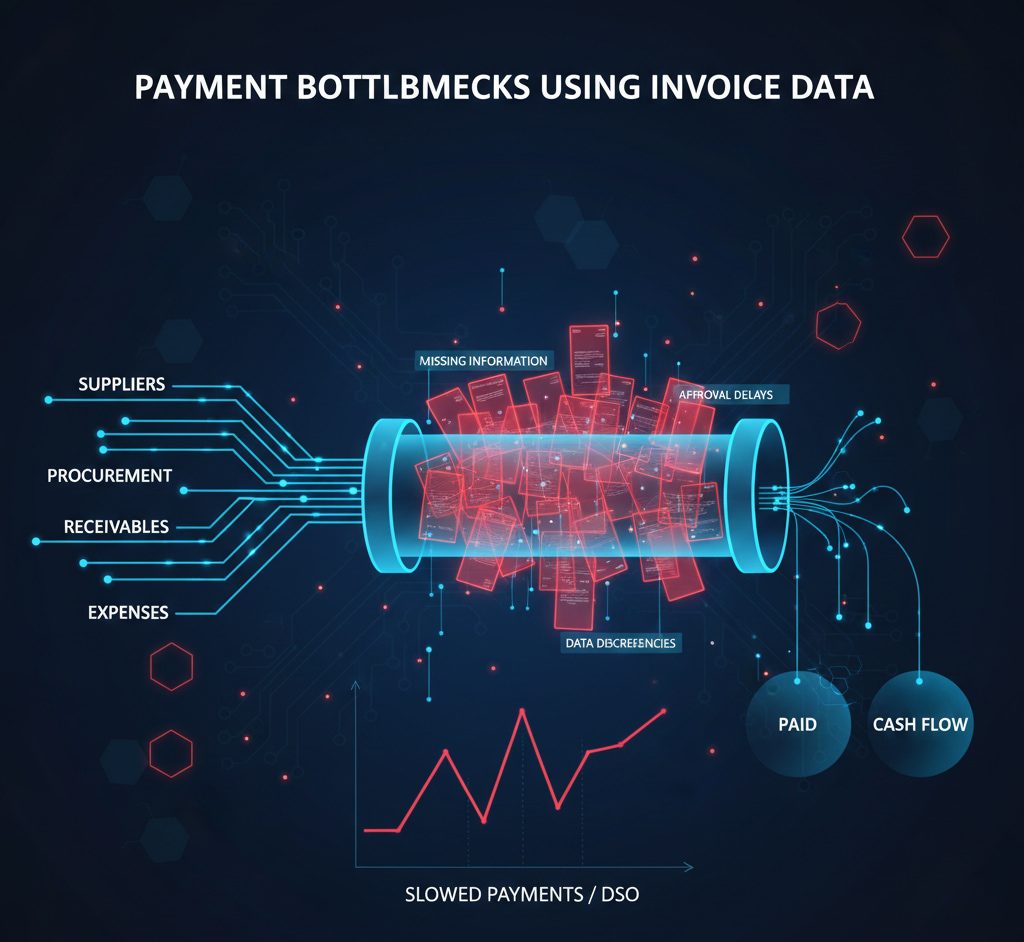
Payment bottlenecks can have a significant impact on the efficiency of your invoicing process and ultimately hinder cash flow. Whether it’s delays in invoice approval, frequent disputes, or slow payments, these bottlenecks can disrupt the seamless flow of revenue into your business. Every delay in the payment cycle represents a lost opportunity to reinvest in growth, pay bills, or maintain healthy operations.
Using invoice data to identify where these bottlenecks occur is essential for improving the invoicing process. By examining invoice funnel metrics such as approval times, dispute rates, and payment delays businesses can pinpoint the exact stages where issues arise and take proactive steps to resolve them.
Are delayed payments impacting your business’s cash flow? Do you know where your invoicing process slows down? If you’re unsure, tracking invoice performance metrics and real-time data syncing could be the key to identifying these bottlenecks and optimizing your invoicing system to accelerate payments and improve overall cash flow.
Payment bottlenecks refer to any obstacles or delays that hinder the smooth flow of payments from customers to businesses within the invoicing process. These bottlenecks can manifest at various stages of the invoicing cycle and can significantly disrupt cash flow. Whether it’s delayed approvals, payment disputes, late payments, or slow internal processes, each bottleneck reduces the efficiency of your invoicing system and ultimately impacts your business operations.
Payment bottlenecks have a cascading effect that can disrupt not only cash flow but also overall business operations. When payments are delayed, businesses are forced to rely on credit lines, depleting available resources and potentially increasing financial costs. Furthermore, the strain of chasing overdue payments or addressing disputes takes away valuable time that could be better spent on strategic initiatives, such as growth and customer acquisition.
Missed Opportunities for Growth:
Without timely payments, businesses may miss out on investment opportunities or the ability to scale. Cash flow is the lifeblood of any business, and delayed payments hinder the ability to reinvest in marketing, hire new talent, or expand operations.
Financial Instability:
Extended payment delays can lead to financial instability. If a business is not receiving payments on time, it may face difficulties covering expenses, paying employees, or investing in growth. This creates an environment of uncertainty and can cause stress among teams and management, further affecting productivity and morale.
Customer Relationships:
Frequent delays in invoice payments or misunderstandings around invoices can negatively impact customer relationships. It can result in damaged trust, reduced client satisfaction, and a tarnished brand reputation. Over time, this can lead to customer churn, affecting revenue growth.
Tracking the right invoice metrics is crucial for identifying payment bottlenecks and improving the invoicing process. By closely monitoring key performance indicators (KPIs) such as invoice approval time, invoice dispute rate, payment delays, and Days Sales Outstanding (DSO), businesses can pinpoint where delays occur and take corrective actions. In this section, we’ll break down these essential invoice metrics, explain why they matter, and show how they can help businesses optimize the invoicing process and improve cash flow.
What It Is:
Invoice approval time measures how long it takes for an invoice to be approved internally before being sent to the customer. This time includes the review process, where departments like sales, finance, and operations ensure the invoice’s accuracy before it is issued.
Why It Matters:
A long invoice approval time can create a bottleneck in the invoicing process, delaying the time it takes to send an invoice and subsequently affecting the payment cycle. The longer it takes to approve an invoice, the longer it takes for the business to get paid, which negatively impacts cash flow.
How It Helps Identify Bottlenecks:
Monitoring invoice approval time helps businesses spot delays caused by slow internal processes. If invoices are sitting in approval stages for extended periods, it could indicate inefficiencies, lack of coordination between departments, or manual approval workflows that need optimization.
Actionable Tip:
What It Is:
The invoice dispute rate measures the percentage of invoices that are disputed by customers. These disputes may arise due to pricing errors, incorrect quantities, or misunderstandings about payment terms.
Why It Matters:
High invoice dispute rates can significantly delay payment, as businesses must spend time resolving disputes before collecting payment. Additionally, frequent disputes indicate that there may be consistent issues with the accuracy or clarity of invoices, leading to an overall inefficiency in the invoicing process.
How It Helps Identify Bottlenecks:
A high dispute rate often points to problems in the invoicing process, such as:
Actionable Tip:
What It Is:
Payment delays refer to the time it takes for customers to pay their invoices after they are issued. This metric tracks the lateness of payments and how often payments are received after the due date.
Why It Matters:
Frequent payment delays can strain your cash flow and cause liquidity problems. The longer customers take to pay, the longer the business has to wait for its revenue, which can hinder operations and growth initiatives.
How It Helps Identify Bottlenecks:
By tracking payment delays, businesses can identify:
Actionable Tip:
What It Is:
Days Sales Outstanding (DSO) is a key metric that measures the average time it takes for a business to collect payment after an invoice is issued. It is calculated by dividing accounts receivable by total credit sales and multiplying the result by the number of days in the period.
Why It Matters:
DSO is a direct indicator of how efficiently a business collects payments. A high DSO means that payments are taking longer to come in, which can stall cash flow and make it difficult to cover operational expenses. A low DSO indicates that payments are being collected more quickly, improving liquidity.
How It Helps Identify Bottlenecks:
Tracking DSO helps businesses identify inefficiencies in their payment collection process. If DSO is high, it suggests that invoices are not being paid on time, which could be due to bottlenecks at various stages in the invoicing process, such as delayed approvals, slow payments, or frequent disputes.
Actionable Tip:
What It Is:
The invoice conversion rate is the percentage of invoices that are successfully paid after being issued. This metric tracks how well invoices are being converted into actual payments, reflecting the effectiveness of your invoicing and payment collection process.
Why It Matters:
A high invoice conversion rate indicates that your invoicing process is efficient and that customers are paying promptly. A low invoice conversion rate may signal issues such as poor customer communication, frequent invoice disputes, or ineffective payment collection strategies.
How It Helps Identify Bottlenecks:
If your invoice conversion rate is low, it means many of your invoices are either unpaid or delayed. Identifying the cause of low conversion can help businesses pinpoint areas such as poor payment reminders, billing errors, or client disputes that need to be addressed.
Actionable Tip:
Effectively analyzing invoice data is crucial for identifying and resolving payment bottlenecks. By leveraging the right metrics and tools, businesses can pinpoint areas where delays occur, improve invoicing processes, and speed up the payment cycle. Below is a step-by-step guide to help businesses analyze invoice data and efficiently address bottlenecks in the invoicing process.
Aging reports are essential for understanding how long invoices have been outstanding and where delays are happening. These reports break down the age of invoices based on the number of days since the invoice was issued. Common aging categories include 0–30 days, 31–60 days, and 61+ days.
How to Use Aging Reports:
Actionable Tip:
Regularly check aging reports to identify and act on overdue invoices. If you notice trends in certain clients being consistently late, it’s time to adjust your payment terms or engage in direct communication.
By analyzing the payment history of customers, you can track how often they make late payments and identify patterns in the invoicing process. This data can reveal whether delays are caused by specific customers, invoice errors, or issues with the payment method.
How to Use Payment History:
Actionable Tip:
Use automated invoicing systems like Retenva to send payment reminders for customers who frequently make late payments, improving timely collections.
Tracking invoice approval time is crucial for understanding how long invoices sit in the approval process before being sent to customers. Delays in this stage often indicate inefficiencies in internal workflows, such as slow approvals or manual processes that hold up invoice submission.
How to Use Invoice Approval Times:
Actionable Tip:
Implement automated approval workflows to streamline the approval process. Tools like Retenva integrate approval stages and notifications, making it easier for teams to quickly approve and send invoices without delay.
Real-time data syncing between invoicing software, accounting systems, and payment gateways ensures that invoice status and payment updates are always accurate. When these systems aren’t synced, it can lead to delays in tracking payments, which affects the ability to follow up on overdue invoices or resolve discrepancies.
How to Use Real-Time Data Syncing:
Actionable Tip:
Use Retenva or similar tools to sync invoicing and payment data in real time, ensuring that all systems are updated instantly to avoid delays and discrepancies.
The invoice conversion rate measures the percentage of invoices that are successfully paid after being issued. A low conversion rate suggests that there may be significant bottlenecks in the invoicing process, whether due to disputes, incorrect information, or poor follow-up.
How to Use Invoice Conversion Rates:
Actionable Tip:
Focus on improving invoice accuracy and payment terms clarity to boost your invoice conversion rate. Use automated invoicing systems to eliminate human errors and reduce disputes.
To maintain smooth cash flow and efficient invoicing, businesses need to adopt best practices that prevent payment bottlenecks from occurring in the future. Whether it’s automating key tasks, setting clear expectations with clients, or improving internal processes, these practices can streamline the invoice funnel, accelerate payment cycles, and ultimately improve your business’s financial health. Below are actionable steps businesses can take to prevent payment delays and bottlenecks in the invoicing process.
Automating invoice generation and payment reminders is one of the most effective ways to prevent bottlenecks in the payment cycle. By reducing the time spent on manual tasks, businesses can minimize human error, ensure timely invoicing, and ensure that reminders are sent consistently.
Why It Matters:
Automated invoicing ensures that invoices are generated promptly after the completion of a sale or service, preventing delays that could stretch the payment cycle. Automated reminders ensure that customers are notified about upcoming payment deadlines or overdue invoices, significantly reducing payment delays.
Actionable Tip:
Use Retenva or similar tools to automate the entire invoicing process, from generation to sending reminders. With automated reminders set at regular intervals (e.g., 5, 10, 15 days after the due date), businesses can ensure timely payments without manual effort.
Clear and transparent payment terms set the tone for successful transactions and help prevent payment delays. Establishing these terms at the beginning of the business relationship ensures that both parties know when and how payments are expected.
Why It Matters:
Ambiguity or confusion around payment terms is a significant source of invoice disputes and delays. Setting clear payment terms such as net 30, net 60, or payment upon receipt reduces misunderstandings and ensures that clients are aware of the payment schedule from the outset.
Actionable Tip:
Ensure that payment terms are clearly stated in every contract and invoice. Consider adding late fees or discounts for early payments to incentivize clients to adhere to your payment terms. Make sure all teams sales, customer service, and finance are aligned on these terms.
Slow internal approval processes can be a significant bottleneck in the invoicing cycle, particularly if multiple departments are involved in reviewing and approving invoices. Streamlining this process helps ensure that invoices are approved and sent quickly, reducing the chances of payment delays.
Why It Matters:
A long or inefficient invoice approval process increases the time it takes to send invoices to clients, which delays payment collection and harms cash flow. Streamlining approvals helps eliminate bottlenecks, ensuring that invoices are reviewed and sent without unnecessary delays.
Actionable Tip:
Implement an automated approval workflow using tools like Retenva, which integrates invoice approval steps. Ensure that every team involved in the process has clear roles and responsibilities, and set deadlines for approvals to ensure invoices are sent out promptly.
Integrating payment gateways like Stripe, PayPal, or Square into your invoicing system can reduce payment bottlenecks by allowing customers to pay easily and directly through the invoice. Real-time payment syncing ensures that businesses are immediately notified when payments are received, improving the overall invoicing cycle and reducing the need for follow-up.
Why It Matters:
Manual payment processing or reliance on checks can slow down payments, especially for businesses with international clients. By providing a quick, convenient way for customers to pay, you not only reduce delays but also improve the customer experience.
Actionable Tip:
Integrate Stripe, PayPal, or another payment gateway with your invoicing system to enable real-time payment tracking. This way, payments are updated automatically in your accounting system, helping to avoid discrepancies and ensure your invoicing system is always accurate.
Regular monitoring of invoice performance metrics like DSO (Days Sales Outstanding), payment conversion rate, and dispute rate is crucial for detecting payment delays early. By analyzing these metrics, businesses can spot payment bottlenecks before they become major issues and adjust processes accordingly.
Why It Matters:
Consistent monitoring of invoice performance gives businesses a clear view of where delays are occurring. If your DSO is increasing or if you notice a high dispute rate, it may indicate that there are issues in the invoicing process that need to be addressed.
Actionable Tip:
Set up regular reviews of invoice data using automated reporting tool like Retenva. Track key metrics and use this data to identify trends or patterns in payment delays, allowing for faster resolution and more accurate forecasting.
A well-trained team is crucial for ensuring that invoicing processes are handled correctly and efficiently. Educating your team on payment terms, invoicing standards, and customer communication can help prevent manual errors, reduce disputes, and speed up the payment process.
Why It Matters:
Even the most automated invoicing system can be slowed down by a team that is not aligned or trained properly. Ensuring that all team members are familiar with invoicing procedures and best practices ensures a smooth invoicing cycle from start to finish.
Actionable Tip:
Conduct regular training sessions for your team on invoicing best practices, payment follow-ups, and communication with clients. Empower your team to spot issues early and resolve them without delay.
Effective invoice data analysis is the key to identifying and eliminating payment bottlenecks in your invoicing process. By regularly monitoring key invoice metrics such as Days Sales Outstanding (DSO), invoice approval times, and invoice dispute rates, businesses can pinpoint where delays are happening and take proactive measures to resolve them. Tracking these metrics allows businesses to optimize cash flow, improve the speed of payments, and ensure that the invoicing system operates as efficiently as possible.
Businesses that leverage invoice data to drive decisions can reduce billing delays, automate payment follow-ups, and streamline the invoice funnel, leading to a smoother payment cycle and faster revenue recognition. By using tools like Retenva, which automates invoicing, real-time payment syncing, and automated reminders, businesses can simplify their invoicing system and ensure that invoices are paid promptly.
As you aim to optimize your invoicing processes, start by implementing the best practices discussed in this blog, such as automating invoicing, setting clear payment terms, and integrating payment gateways for real-time syncing. Begin tracking your invoice funnel metrics today to identify where improvements can be made and take action to eliminate payment delays.
Start optimizing your invoicing process today with Retenva to automate invoicing, track payments efficiently, and improve cash flow. Begin by tracking invoice funnel metrics and implement the strategies mentioned in this blog to streamline your invoicing and payment collection process.