
Automation has transformed the way organizations follow up on invoices, communicate with customers, and manage accounts receivable. Instead of relying on guesswork or sporadic reminders, modern workflows allow businesses to track detailed performance indicators across email and SMS communications. These indicators, often called invoice automation metrics, play a major role in predicting cash flow, identifying friction in the payment cycle, and improving the reliability of customer communications.
For years, many companies believed that simply sending reminders was enough. But data repeatedly proves that the most successful finance teams don’t just automate reminders, they analyze patterns. A study from McKinsey explains that automation paired with measurement substantially reduces late payments, mainly because organizations begin adjusting strategies based on how customers actually respond.
Every automated workflow, whether email reminders, SMS nudges, or invoice sequences, produces behavioral data. Businesses that actively monitor invoice automation metrics gain insight into which communication channels drive the fastest payment. Using invoice automation metrics consistently reduces late payments and improves cash flow predictability
Understanding that data allows teams to:
Without metrics, automation is simply noise. With metrics, it becomes a predictable cash-flow engine. Combining email automation metrics with SMS automation metrics provides a fuller picture of customer responsiveness.
Even small variations in communication flow can change results greatly. For example, a study from Experian found that multi-channel outreach produces up to 3X higher engagement than single-channel messaging, a key insight for any invoice workflow that relies only on email today.
Email remains the foundation of digital invoicing. Customers still expect invoices to arrive in their inbox, even if they often overlook them. That’s why email automation metrics are a crucial part of the accounts receivable process.
Below are the most important ones.
Tracking email automation metrics like open rate and click-through rate allows companies to refine subject lines and improve invoice visibility. Open rate measures how many recipients view the message. While this seems basic, it is heavily influenced by:
Research from Litmus shows that open rates vary significantly based on industry and content type. Invoice reminder emails sit on the lower end because customers often avoid payment-related messages. That’s why diversified channels, such as SMS, are increasingly important.
CTR indicates whether recipients click the payment link or invoice preview inside the email. Click-through rates combined with invoice automation metrics reveal how effectively customers engage with payment links. High CTR means your message structure is clear and the call-to-action is strong. Low CTR may signal:
Because most invoices are now paid through hosted links (Stripe, QuickBooks, Xero, etc.), CTR directly correlates with payment intent.
Deliverability tracks whether messages actually reach inboxes rather than bouncing or going to spam. Factors impacting deliverability include:
In automated invoice workflows, poor deliverability can cause major revenue delays because customers never see the reminder. Some systems, such as Retenva and similar automation platforms, help detect when email delivery repeatedly fails, allowing businesses to switch channels or correct contact information.
A lesser-known but incredibly insightful metric is engagement time, how long a recipient actively views the message. If customers only skim messages for a second, they may not see the essential information (payment link, due date, balance).
High engagement time usually reflects:
This metric becomes especially helpful when A/B testing email templates.
SMS now plays a central role in payment follow-ups. According to research from Gartner, SMS open rates can reach up to 98%, making it the most dependable communication channel for reminders.
Below are the SMS metrics that matter.
Delivery rate shows the percentage of text messages successfully routed to mobile carriers and devices. Low SMS delivery may be caused by:
Unlike email, SMS delivery failures often occur because customer phone records were never verified.
While SMS open rate is consistently high, it still provides valuable context when compared against email open rate. For most businesses, SMS significantly outperforms email. However, variations exist based on:
This metric can help optimize which channel triggers first in the reminder sequence.
Whenever a payment link is included in the message, CTR becomes the defining measure of SMS effectiveness. It reflects real customer intent. When CTR is low, it often indicates:
Short, clean payment URLs usually perform best.
Many customers reply directly to a text message when they have a question or need a brief extension. SMS response rate becomes an indicator of:
This metric also reveals how often customers prefer conversational billing support rather than email threads.
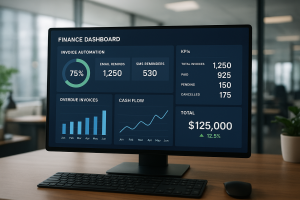
Beyond email and SMS performance, businesses must monitor broader invoice automation KPIs to understand how these communications affect actual payment outcomes.
These metrics reflect financial impact, not just message activity.
DSO measures how many days, on average, it takes customers to pay after a sale. It’s one of the most widely used financial KPIs. A lower DSO means faster cash flow. According to data from PwC, small reductions in DSO can significantly improve liquidity across an entire year.
Automation typically reduces DSO because customers are reminded more consistently and through multiple touchpoints. Consistently reviewing invoice automation metrics helps identify overdue patterns and reduce DSO over time.
Invoice aging reveals how many invoices fall into buckets such as:
This distribution exposes patterns in customer payment behavior. If a large portion of invoices consistently moves into the 60–90 day category, the billing strategy or communication cadence likely needs revision.
This metric shows how long customers take to act once the initial automated reminder is sent. It provides clarity on:
When combined across months, this KPI can forecast payment velocity.
Sometimes called the reminder-to-payment ratio, this measures how many reminders lead to payment within a given timeframe. It highlights:
While platforms like Retenva track this automatically, the principle applies universally across any automation system.
Understanding basic KPIs is the foundation of strong invoice automation, but advanced metrics reveal deeper patterns that influence long-term cash flow. These measurements help companies fine-tune communication timing, choose the best channels, and evaluate how well their automation strategy integrates with accounting processes.
In this section, we explore higher-level email metrics, deeper SMS performance indicators, and financial KPIs that expose how effectively a business is converting reminders into payments. These data points have become essential in a world where customers expect fewer interruptions, faster communication, and frictionless payment experiences.
Email remains the primary channel for delivering full invoice details such as balance, due date, and itemization. Therefore, advanced metrics help businesses evaluate whether customers are actually engaging with critical information or silently ignoring it.
Below are the metrics that go beyond basic opens and clicks.
Scroll depth measures how far recipients scroll through an invoice email. This is valuable because invoices often include:
If most customers stop scrolling near the top, the email may be too long or poorly structured. Data from the Nielsen Norman Group shows that users spend the most attention above the fold, which means invoice details should be placed early in the message.
Advanced communication tools can track click and viewing hotspots inside an email. This metric provides insight into:
Heatmap analytics are especially useful for businesses performing A/B testing on template designs. While not all automation platforms include heatmaps, some, such as Retenva and more advanced email tools, support this functionality indirectly through integrations.
A significant percentage of invoice communication includes attachments, especially PDF invoices. Tracking whether customers open the attachment helps determine:
If attachments remain unopened, businesses may need to embed invoice summaries directly in the email body instead.
Device type influences how customers interpret invoice reminders. Research from Statista shows that mobile devices account for more than half of online interactions globally. For invoice automation, device metrics reveal:
If most customers open reminders on their phones, SMS may pair better with email for faster conversions.
While SMS metrics may seem simple at first glance, deeper analysis reveals patterns that drastically influence payment speed. Because text messages are immediate and personal, businesses must analyze more granular data to avoid over-messaging customers.
Unlike email, where users may take hours or days to check their inbox, SMS behavior is measured in seconds. Time-to-open indicates how quickly the reminder is viewed after it is delivered. Fast open speeds often reflect:
If open speeds are slow or inconsistent, the issue may be due to geographic time zones, poor timing, or unreliable carrier routes.
CTR only measures who clicked the link. Link completion tracks how many reached the payment page successfully. Failures can occur due to:
This metric helps determine whether payment links need simplification. Companies using cloud-based invoicing services often rely on smart links from platforms like Stripe or QuickBooks, which tend to generate higher completion rates.
Follow-through tracks whether customers actually complete payment within a certain window after receiving a reminder, usually 24 to 72 hours. This metric is one of the strongest indicators of SMS effectiveness because it links customer action directly to outreach timing.
If follow-through drops, businesses may need to evaluate:
Only a small percentage of automation tools consolidate SMS follow-through with invoice status changes. Retenva is one example, though many accounting systems also track this when paired with messaging tools.
If customers opt out of SMS reminders too often, it suggests the workflow is overwhelming or poorly timed. High opt-out rates are usually connected to:
Reducing message volume or syncing messages with email timing can help reduce opt-outs while still maintaining communication effectiveness.
While messaging metrics highlight customer behavior, invoice automation KPIs reveal how quickly money moves through the system. These numbers define cash-flow predictability and help businesses identify where payments stall.
This metric reflects how many customers pay immediately after receiving the initial reminder, without needing follow-up messages. A high first-touch ratio indicates:
When first-touch rates are low, businesses typically adjust the tone of reminders or schedule earlier notifications.
Follow-up reduction measures how many reminders are saved through optimization. For example, improving subject lines or adjusting SMS timing may lead to fewer messages needed per invoice.
Companies track this metric to:
Even small improvements significantly influence operational efficiency.
This KPI analyzes which payment options are most frequently used after receiving reminders. Trends often show:
Knowing which payment methods customers gravitate toward helps businesses prioritize faster settlement channels. Studies from Deloitte highlight rising mobile payment preference, supporting this trend.
Cadence efficiency evaluates whether the timing between reminders maximizes payment response. Too many reminders cause annoyance; too few allow invoices to age. Businesses measure:
Retenva users and users of similar automation tools often discover their strongest cadence through continuous testing, not assumptions.
Some invoices inevitably reach the 60-, 90-, or even 120-day mark. Late-stage recovery tracks how effectively overdue invoices convert after extended aging.
A strong late-stage recovery rate shows:
A poor recovery rate can indicate deeper customer payment issues or flawed processes upstream.
These often-overlooked indicators show how well the entire invoicing workflow functions, not just individual reminders.
For any automation system, incorrect or incomplete invoice data leads to:
Invoice import accuracy is essential whether a company uses QuickBooks, Stripe, Xero, or a multi-platform sync tool.
This shows how reliable customer emails and phone numbers are. Poor contact validity leads to reduced engagement across all channels. Businesses often discover bad contact data only when analyzing this metric.
Companies using SMS automation monitor the relationship between:
Tracking this ensures that messaging remains profitable and that high-volume reminders do not exceed the recovered revenue.
Once a business understands the core and advanced metrics behind email reminders, SMS notifications, and invoice automation, the next step is building a system to analyze those metrics consistently. Metrics only hold value when they inform decisions. This final section explores optimization strategies, workflow design, experimentation methods, and long-term maintenance for sustaining high-performing automation systems.
The goal is to help businesses transform data from simple “numbers on a dashboard” into practical insights that improve communication quality and accelerate customer payments.
Email metrics frequently reveal subtle shifts in customer behavior. Instead of focusing on individual numbers, successful teams analyze patterns across time, patterns across customer segments, and patterns across message formats.
An open rate alone doesn’t explain why customers behave a certain way. However, evaluating open rates across variables helps uncover real causes. For example:
Studies from Oberlo demonstrate that timing and subject line clarity are two of the biggest drivers of open rates, especially for financial or transactional messages.
When companies use patterns instead of isolated statistics, their email performance improves steadily and predictably.
CTR becomes powerful when paired with customer journey analysis. For example:
This type of multi-layer interpretation helps businesses determine whether the problem is the email content, the timing, or the invoicing platform itself.
Some invoice workflows gather data about the time between email delivery and user engagement. Time-based data reveals:
Email engagement often reflects lifestyle patterns more than business logic, which is why time-of-day optimization frequently produces measurable improvements.
SMS is immediate and concise, which means customers tend to respond quickly. Yet SMS also requires sensitivity; overuse can lead to opt-outs or negative sentiment. Proper interpretation of SMS metrics helps maintain the right balance.
SMS engagement windows are much shorter than email windows. Most people open texts within a few minutes. Businesses should measure:
Insights from CTIA show that SMS usage patterns can differ significantly by region and demographic. Understanding these differences allows for region-specific reminder scheduling.
SMS response rate isn’t only about payment, it also indicates whether the message tone feels appropriate. Messages may be too formal, too urgent, too vague, or too repetitive. Businesses often see response-rate improvements when they:
Automation tools with A/B testing features, or platforms like Retenva that sync invoice data efficiently, make these experiments easier to run.
Down-funnel metrics show what happens after someone clicks the SMS link. This is often where hidden problems appear:
Optimizing the landing experience often leads to more improvement than altering the SMS message itself.
Email and SMS should not operate independently. Businesses achieve the strongest results when they combine insights from both channels. Integrating invoice automation metrics from both email and SMS channels allows businesses to design a reminder sequence optimization that maximizes payments.
Some businesses discover:
Metrics reveal which channel creates the strongest first impression and which works best after deadlines pass. Monitoring invoice automation metrics over time supports continuous improvement in email and SMS performance.
A reminder sequence is the order and timing of messages. Optimization involves:
Analytics show how many reminders are truly necessary. A well-tuned sequence reduces customer annoyance while increasing collection speed.
Long-term automation requires more than a static template. High-performing organizations regularly review:
Tools with invoice syncing features, including Retenva and other multi-platform systems, simplify this review by aligning communications with real-time invoice status.
Beyond communication data, invoice automation relies on deeper financial metrics that reflect business stability. Cash flow automation indicators derived from invoice automation metrics give finance teams a reliable way to forecast revenue.
Invoice aging patterns help businesses categorize customers into:
This segmentation helps allocate reminder intensity accordingly. Businesses may send earlier SMS nudges to customers known for slow payments or modify payment terms for those consistently exceeding due dates.
For subscription-based businesses, invoice automation influences monthly recurring revenue (MRR). Metrics to watch include:
Research from Zuora demonstrates that billing communication plays a direct role in subscription retention.
Every reminder, email, SMS, or manual, costs something. Companies track:
This ratio helps determine whether automation workflows are financially efficient.
Invoice automation is not a “set and forget” system. High-performing organizations treat it as a living process. Regularly reviewing invoice automation metrics ensures communication performance analytics remain accurate and supports ongoing improvement of payment reminder KPIs.
Emails and SMS messages should evolve:
Refreshing templates every few months prevents communication fatigue.
A structured quarterly review typically includes:
These audits reveal weaknesses before they affect cash flow.
Small changes in:
often produce outsized improvements. Automated testing cycles ensure continuous refinement.
Whether using QuickBooks, Stripe, Xero, or a sync tool like Retenva, invoice automation relies on accurate data. Maintaining sync integrity prevents:
When syncing is reliable, automation metrics remain accurate.
Organizations that rely on data, not guesses, consistently reduce overdue invoices and optimize payment speed. Email metrics highlight customer attention patterns. SMS metrics reflect immediacy and urgency. Invoice KPIs measure financial outcomes. When combined, these metrics create a powerful feedback loop that enhances cash flow and strengthens customer communication.
By consistently reviewing data, refining message structures, syncing invoicing systems reliably, and maintaining a multi-channel approach, businesses create automation workflows that remain effective for years, not weeks.
Optimization of reminder sequence timing should be guided by invoice automation metrics to maximize collection efficiency. Take control of your cash flow today by tracking your invoice automation metrics more effectively, try Retenva to streamline email and SMS reminders and improve your payment collection.